
When Is the Best Time to Hunt Deer? Expert Tips for Every Season
“When should I hunt?” is one of the most common questions in whitetail hunting, and the honest answer is: it depends on the day, the season, the weather, and what deer are doing at that exact moment. But that doesn’t mean timing is a guessing game. Deer behavior follows predictable patterns shaped by daylight, temperature, food availability, and the biological pull of the rut — and once you understand those patterns, you can stack the odds heavily in your favor instead of just hoping a buck walks by.
This guide breaks down the best times to hunt deer by time of day, by phase of the season, and by weather condition, so you can match your limited hunting days to the windows that actually matter. We’ll also cover how moon phase and hunting pressure factor in. Timing works best alongside solid fieldwork — if you haven’t already, pair this with our guide on how to scout deer like a pro to know exactly where deer are moving during each of these windows.
“You can’t control when a buck decides to move, but you can control whether you’re in position when he does. That’s the entire game.”
🌅 Best Time of Day to Hunt Deer
First and Last Light: The Most Reliable Windows
Deer are crepuscular, meaning they’re biologically wired to be most active around dawn and dusk. The first hour of legal shooting light and the final hour before dark consistently produce the most deer movement, especially between bedding and feeding areas. If you can only hunt a limited window, these are the two to prioritize above all others.
- Dawn: deer returning from overnight feeding to daytime bedding cover
- Dusk: deer leaving bedding areas to feed before or after dark
- Movement is often fastest and most direct during these transition windows

The Midday Myth: Why 10 AM to 2 PM Isn’t Dead Time
Many hunters climb down around 9 or 10 AM, assuming deer activity has stopped for the day — but this is one of the most overlooked windows during the rut. Bucks cruising for does don’t punch a clock, and midday movement often spikes during peak rut precisely because other hunters have vacated their stands. If you can only hunt one “off” window during November, midday during the rut is it.
- Rut-season midday movement can rival or exceed morning and evening activity
- Reduced hunting pressure during midday hours means less spooked, more relaxed deer
- Outside the rut, midday activity drops but doesn’t disappear entirely, especially in bedding-adjacent thick cover
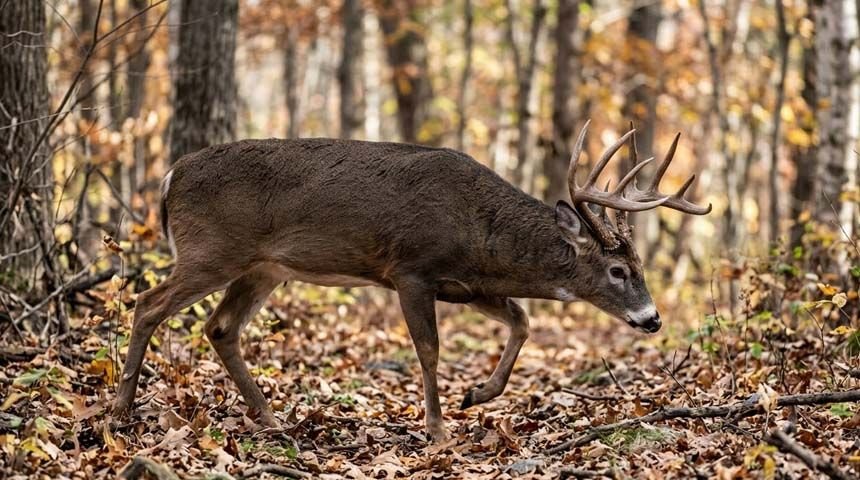
All-Day Sits During the Rut
During peak rut, an all-day sit in a high-percentage travel corridor often outperforms hunting only the traditional dawn and dusk windows separately. Bucks are covering ground constantly in search of receptive does, and leaving your stand for a midday break is exactly when a cruising buck is statistically most likely to walk through. If you have the stamina and the right setup — including a way to stay warm through a long cold sit — an all-day rut hunt is one of the highest-percentage tactics available.
- Best reserved for peak rut, roughly a one-to-two week window depending on region
- Choose a stand near a confirmed travel corridor or pinch point, not a food source alone
- A comfortable setup matters — one of the best deer blind heaters can be the difference between staying put through midday or climbing down early
🍂 Best Time of Year to Hunt Deer, Phase by Phase
Early Season (Late September – Early October)
Deer are still on predictable summer-like patterns, moving between bedding cover and reliable food sources on a fairly consistent schedule. This is often the easiest window to pattern a specific buck, since rut-driven unpredictability hasn’t kicked in yet. Warm early-season temperatures can push most movement into the last 30–45 minutes of daylight, so evening sits near food sources tend to outperform mornings.
- Focus on food sources: agricultural fields, food plots, early mast
- Evening sits generally outperform mornings due to warmer temperatures
- Minimize entry and exit disturbance — deer are still on undisturbed, predictable patterns
Pre-Rut (Mid-to-Late October)
Bucks begin establishing scrape lines and rub lines, testing dominance and marking territory ahead of breeding activity. Daylight movement increases as bucks start covering more ground, though they haven’t yet abandoned caution for chasing does. This transitional window rewards hunters who’ve done their homework — active scrapes and fresh rubs found while scouting deer like a pro become genuinely huntable during this phase.
- Scrape and rub activity ramps up noticeably
- Bucks increase daylight movement while establishing territory
- Mock scrapes and calling become more effective as competition instincts rise
Peak Rut (Typically Early-to-Mid November, Varies by Region)
This is widely considered the single best window of the entire season. Bucks abandon normal caution and predictable patterns to cruise constantly in search of receptive does, resulting in the highest daylight movement of the year — including the midday hours most hunters ignore. Exact timing varies significantly by latitude and region, so confirming local rut timing data for your specific area is more useful than a generic national date.
- Highest overall daylight movement of the entire season
- Bucks travel widely and unpredictably, increasing encounter odds even in average stand locations
- Doe estrous scent and rattling are at their most effective during this window
- Timing shifts by latitude — northern states often peak earlier than southern states
Post-Rut / Second Rut (Late November – Mid December)
After peak breeding activity slows, bucks are worn down and movement briefly drops as they recover and refocus on feeding. However, does that weren’t bred during the first cycle come into estrus again roughly 28 days later, triggering a secondary — though smaller — spike in buck activity known as the second rut. This window is often overlooked but can produce a mature buck response comparable to peak rut in areas with a strong doe population.
- Initial lull as bucks recover from peak rut exertion
- Second rut triggers a smaller but real secondary activity spike
- Food sources near doe bedding areas become productive stand locations again
Late Season (Late December – January, Where Legal)
Breeding activity is essentially over, and deer shift entirely into survival mode, prioritizing high-calorie food sources to recover body condition ahead of winter. Cold weather concentrates movement into predictable windows around the best remaining food, making this one of the most patternable stretches of the year if you can locate the right food source. Comfort becomes a real factor in late-season success — long, cold sits demand the right gear from your deer hunting gear checklist.
- Deer movement concentrates heavily around remaining high-calorie food sources
- Cold fronts trigger some of the most predictable movement of the entire season
- Standing crops, food plots, and browse become the primary factor in stand selection
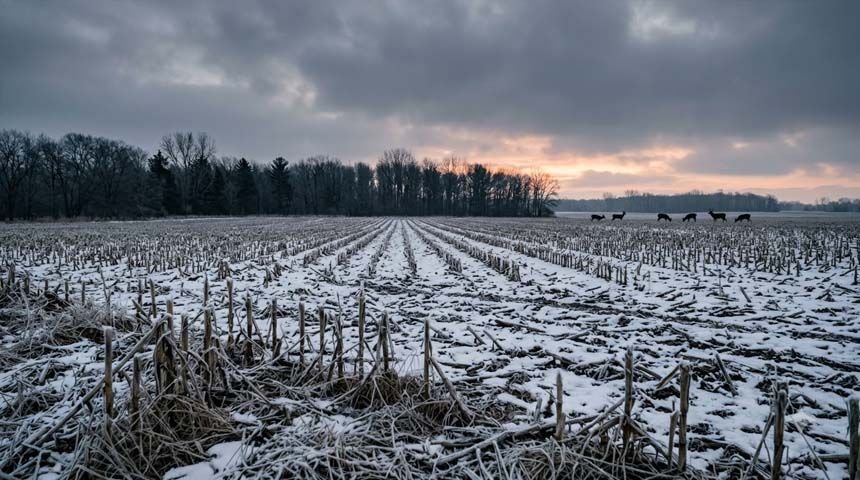
🌦️ Weather Conditions That Trigger Movement
Cold Fronts
A sharp temperature drop, especially the first significant cold front of the season, is one of the most reliable triggers for increased daylight deer movement at any point in the year. Deer sense the pressure change and often move heavily in the 24–48 hours surrounding a cold front’s arrival, feeding aggressively before and after the temperature shift.
Barometric Pressure
Rising barometric pressure following a storm system, particularly when paired with dropping temperatures, tends to correlate with increased deer activity. Many experienced hunters track barometric trends alongside standard weather forecasts, prioritizing hunts during pressure swings over static, unchanging weather patterns.
Wind and Precipitation
Heavy, sustained rain or high wind tends to suppress deer movement, as deer rely heavily on scent and hearing to detect predators, and both senses are compromised in stormy conditions. Movement often spikes noticeably in the calm period right after a storm clears, as deer make up for reduced activity during the weather event itself.
🌙 Does Moon Phase Actually Matter?
Moon Phase: A Secondary Factor, Not a Primary One
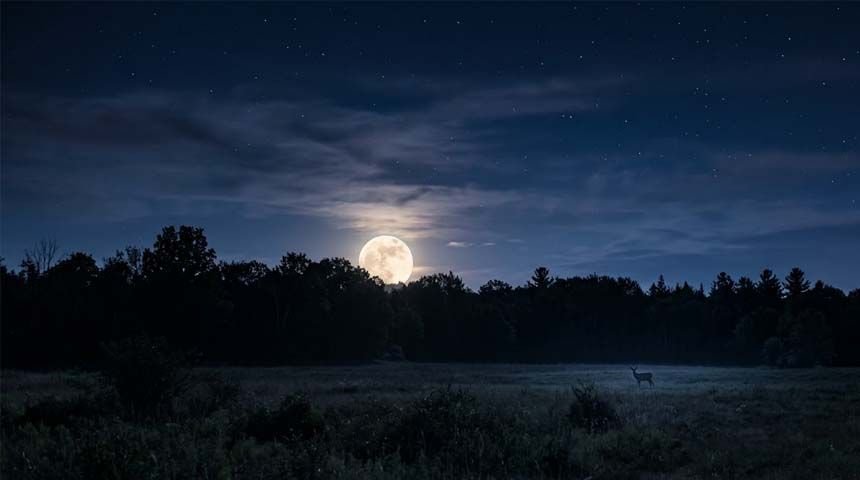
Moon phase remains one of the more debated topics in deer hunting. The general theory holds that a full moon allows deer to feed more comfortably overnight, potentially reducing daylight movement the following morning, while a new moon with less nighttime visibility can push more activity into legal shooting hours. That said, most wildlife research suggests weather, temperature, and rut timing have a far larger measurable effect on daylight movement than moon phase alone. Use moon phase as a minor tiebreaker when planning hunts, not as the deciding factor over confirmed sign, wind direction, or seasonal timing.
🚶 Hunting Pressure and Day-of-Week Timing
Weekday Hunts Often Outperform Weekends
On heavily hunted public land or shared leases, hunting pressure itself becomes a major factor in deer movement. Weekend hunting pressure often pushes mature bucks into more nocturnal or bedding-area-restricted patterns by Sunday afternoon, while weekday mornings — especially Tuesday through Thursday — see comparatively lighter pressure and more relaxed daylight movement. If your schedule allows any flexibility, a weekday sit in November can be significantly more productive than fighting weekend crowds.
📋 Quick Reference: Best Times by Season
| Phase | Timing | Best Time of Day | Primary Focus |
|---|---|---|---|
| Early Season | Late Sept–Early Oct | Evening | Food Sources |
| Pre-Rut | Mid–Late Oct | Dawn & Dusk | Scrape/Rub Lines |
| Peak Rut | Early–Mid Nov (region-dependent) | All-Day | Travel Corridors |
| Post-Rut/Second Rut | Late Nov–Mid Dec | Dawn & Dusk | Food Near Bedding |
| Late Season | Late Dec–Jan | Cold Front Windows | High-Calorie Food |
🎒 Planning Your Hunt Around Timing
Before Every Hunt, Check
- Current phase of the season (early, pre-rut, peak rut, post-rut, late season)
- Recent and forecasted temperature swings or incoming cold fronts
- Barometric pressure trend over the past 24–48 hours
- Wind direction relative to your stand and the deer’s likely approach
- Day of the week and recent hunting pressure on the property
- Confirmed sign or trail camera activity for your specific stand location
- Comfort gear appropriate for the sit length and temperature
❓ Frequently Asked Questions
1. What is the single best time of day to hunt deer?
The first and last hour of legal light are the most consistently productive windows across the entire season. During peak rut, however, midday movement can rival or even exceed those traditional windows, making an all-day sit worthwhile.
2. When exactly does the rut happen?
Rut timing varies by latitude and region, generally falling somewhere in late October through November in most of North America, with peak breeding often concentrated in a one-to-two week window. Checking regional rut prediction data for your specific state or county is more reliable than relying on a single national date.
3. Is the second rut worth hunting?
Yes, especially on properties with a healthy doe population. While the second rut produces less overall movement than peak rut, it can still trigger a real, huntable spike in buck activity roughly 28 days after peak breeding.
4. Should I plan hunts around the moon phase?
Moon phase can be a minor consideration, but weather, temperature swings, and seasonal timing have a much larger measurable impact on deer movement. Use moon phase as a tiebreaker between otherwise similar hunting days, not as your primary planning factor.
5. Why did I not see deer on a “perfect” cold front day?
Even ideal conditions don’t guarantee sightings — stand location, wind direction relative to deer bedding, recent hunting pressure, and local deer density all still matter. Weather triggers increase the odds of movement, but they don’t override poor stand placement or a blown wind.
6. Is it worth hunting all day during the rut, or should I take breaks?
If your stand is in a genuine travel corridor and you can stay comfortable, an all-day sit during peak rut is one of the highest-percentage tactics available. Climbing down for a midday break is exactly when a cruising buck is statistically most likely to walk through undisturbed.
🦌 Final Thoughts: Stack the Odds With Timing
There’s no single “best” time to hunt deer that applies to every day of the season — timing is a moving target shaped by season phase, weather, and pressure. Dawn and dusk remain the safest bets year-round, peak rut rewrites the rulebook entirely with all-day movement potential, and cold fronts can turn an otherwise average day into one of the best sits of the season. The hunters who consistently succeed aren’t the ones who guess well — they’re the ones who track these patterns deliberately and show up when the odds are genuinely in their favor.
Combine good timing with solid fundamentals: confirm sign with regular scouting, understand whitetail behavior beyond just timing, and make sure your gear checklist matches the conditions you’re hunting into. Layer in a deer attractant, one of the best deer calls, or a deer decoy during the right window, and you’ll turn a good hunt into a genuinely great one.
Rut timing, season dates, and legal hunting hours vary significantly by state and region — always confirm current regulations with your local wildlife agency before planning a hunt. Explore our tripod deer stand guide, rifle scope recommendations, and deer hoist guide to round out your season planning. New to the sport? Our recommended deer hunting book and notes on rare black deer sightings and whether deer eat fruit are worth a read too.

Leave a Reply