
Do Deer Eat Fruit? The Sweet Side of Herbivores
Yes — deer absolutely eat fruit, and often enthusiastically. Whitetail deer are opportunistic browsers, and while grasses, forbs, and woody browse make up the bulk of their year-round diet, fruit becomes a genuine priority whenever it’s available. Anyone who’s watched a deer clean out a dropped-apple pile under a backyard tree, or noticed a trail camera light up under a wild persimmon tree every evening in October, already knows this firsthand. Fruit isn’t just a snack deer tolerate — for a few weeks each year, it can become the single biggest draw on an entire property.

This guide covers exactly which fruits deer prefer, why fruit is so appealing to them nutritionally, how fruit fits into a deer’s diet across the seasons, and how hunters and landowners can use that knowledge — from planting fruit trees to placing attractants — to draw more deer traffic. If you’re building out a broader property strategy, this pairs naturally with our guide to scouting deer like a pro, since confirmed fruit sources are exactly the kind of sign worth marking on a scouting map.
“A dropped apple pile can outdraw a mineral site, a food plot, and a trail camera lure combined — for about three weeks a year, and then it’s gone.”
🍎 Why Fruit Appeals to Deer
High Sugar Content Means Fast, Efficient Energy
Ripe fruit is loaded with natural sugars, giving deer a quick, easily digestible energy source at a much higher concentration than the grasses and leafy browse that make up most of their diet. In the wild, calorie-dense food isn’t guaranteed, so deer are instinctively drawn to anything that delivers a lot of energy for relatively little foraging effort — and ripe fruit fits that description perfectly.
Fruit Arrives Right When Deer Need to Bulk Up
Most wild and cultivated fruits ripen in late summer through fall — the exact window when deer are trying to build fat reserves ahead of the rut and the coming winter. Bucks are recovering from antler growth and preparing for the physical toll of the rut, while does are often still supporting fawns. The timing of fruit availability lines up almost perfectly with when deer benefit most from a calorie-dense food source.
Fruit Is Easy to Digest and Highly Palatable
Compared to tougher browse or fibrous plant stems, ripe fruit is soft, easy to chew, and quick to digest. Deer are selective eaters that constantly weigh effort against reward, and a fruit source that requires minimal chewing for a high sugar payoff wins out over less palatable options almost every time it’s available.
🍇 Fruits Deer Actually Eat
Wild Fruits and Soft Mast
In natural settings, deer rely on a range of native soft mast that ripens through summer and fall. These wild sources are often more reliable long-term than planted trees, since they’re already adapted to the local climate and soil.
- Wild persimmons: A fall favorite in much of the whitetail’s range, often triggering intense feeding activity once fruit starts dropping
- Wild grapes: Both the fruit and the vines themselves are readily browsed
- Blackberries and raspberries: Consumed along with the leaves and canes throughout the growing season
- Crabapples: A smaller, tarter wild cousin of the cultivated apple, still highly attractive to deer
- Mulberries: Heavily consumed in early-to-mid summer when they drop
- Wild plums: Eaten readily where they occur, particularly along field edges and fence lines
Orchard and Cultivated Fruits
Cultivated fruit trees, whether in a backyard orchard, an abandoned homestead, or a food plot planting, are some of the most reliable deer magnets available. Apple trees in particular are famous for drawing consistent deer traffic once fruit begins dropping.
- Apples: Arguably the single most popular cultivated deer fruit, especially once they start falling and softening
- Pears: A close second to apples, often ripening slightly later in the season
- Cherries: Both wild and cultivated varieties are browsed, including leaves and twigs beyond just the fruit
- Plums: Readily eaten from cultivated trees near field edges or old homesteads
- Persimmons (cultivated varieties): Larger-fruited cultivated persimmons draw the same intense interest as wild ones
📋 Detailed Fruit-by-Fruit Reviews
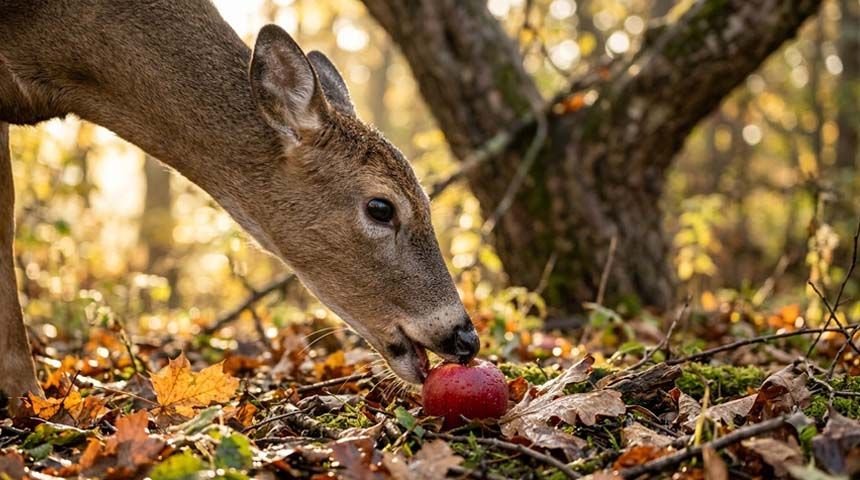
1. Apples — Best Overall
★ Key Features & Benefits
- Widely Available: Found in orchards, old homesteads, backyards, and increasingly in food plot plantings.
- Long Drop Window: Different varieties ripen at different times, potentially extending a single property’s apple season by weeks.
- High Visibility Sign: Fallen fruit, worn trails, and browse damage make apple trees easy to identify while scouting.
- Strong Early-Season Timing: Ripens right as early archery and early rifle seasons open in many states.
- Attracts Consistently: Deer often return to the same productive tree daily once they’ve found it.
✔ Pros
- Extremely high, consistent deer draw
- Easy to identify and scout
- Great early-season timing
- Widely available across most regions
- Long overall season with varied cultivars
❌ Cons
- New trees take years to produce
- Young saplings need protection from browsing
- Drops can attract other wildlife too
Apples — The Gold Standard Fruit Draw
If you only learn to identify one fruit tree in the woods, make it an apple tree. Few natural food sources produce this kind of consistent, high-value deer traffic, and a mature tree found while scouting can anchor an entire early-season stand strategy for years.
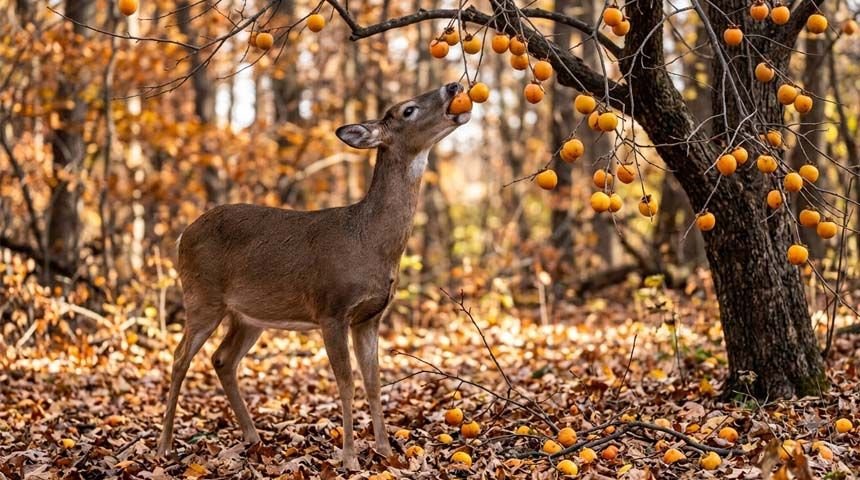
2. Persimmons — Best Fall Draw
★ Key Features & Benefits
- Rut-Season Timing: Peak ripening often overlaps with pre-rut and early rut activity in much of the whitetail’s range.
- Intense Palatability: Once fully ripe (and no longer astringent), persimmons are extremely sweet and highly preferred.
- Outcompetes Hard Mast: A heavy persimmon drop can pull deer traffic away from a nearby oak stand for as long as fruit remains.
- Distinct, Easy-to-Spot Sign: Orange fruit skins and pits scattered on the ground make persimmon activity easy to confirm.
- Both Wild and Cultivated Options: Wild native trees work well, and larger-fruited cultivated varieties draw the same intensity.
✔ Pros
- Extremely strong draw once ripe
- Timing overlaps with prime rut activity
- Can outcompete acorns for deer attention
- Easy to visually confirm activity
- Native trees require zero maintenance
❌ Cons
- Unripe fruit is astringent and avoided
- Short, weather-dependent ripening window
- Wild trees can be inconsistent producers year to year
Persimmons — The Rut-Season Wildcard
A productive persimmon tree found in October is one of the best pieces of intel a scouting trip can turn up. The timing alone — landing right in the pre-rut to early-rut window covered in our guide to the best time to hunt deer — makes it worth prioritizing over a lot of other sign.
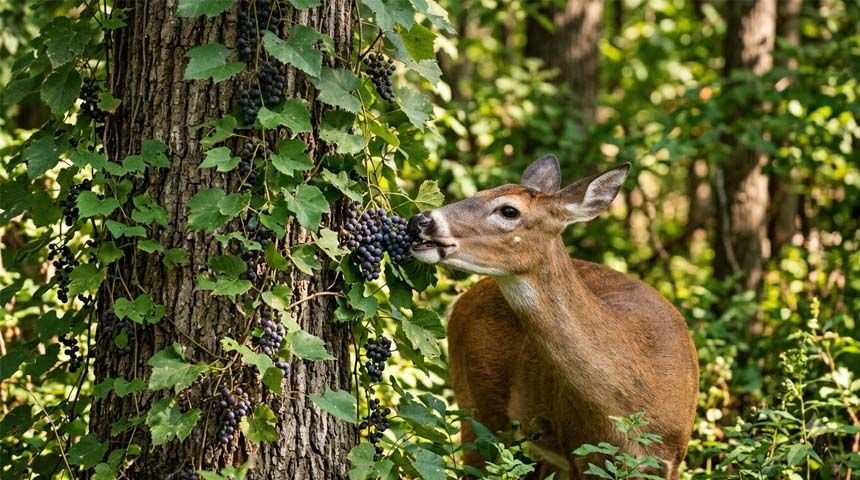
3. Wild Grapes — Best Wild Source
★ Key Features & Benefits
- Multi-Part Food Source: Deer browse the leaves and tender vine growth in addition to the ripe fruit itself.
- Common Along Edges: Frequently found climbing trees at field edges, fence lines, and timber transition zones.
- No Planting Required: Established wild vines require zero maintenance and often go unnoticed until scouted specifically.
- Extended Availability: Vines can hold fruit clusters over a longer window than a single fruit tree’s drop period.
- Doubles as Cover: Dense grape vine tangles also provide bedding and screening cover, adding value beyond food.
✔ Pros
- Zero-maintenance wild food source
- Multiple browsable parts, not just fruit
- Common in edge and transition habitat
- Provides cover as well as food
- Often overlooked by other hunters
❌ Cons
- Harder to spot than a standalone fruit tree
- Fruit production varies by vine age and sunlight
- Less concentrated draw than a heavy apple or persimmon drop
Wild Grapes — The Overlooked Edge Resource
Wild grape vines rarely get the attention apple trees do, but a heavy vine tangle along a field edge is doing double duty as both food and cover. Walk fence lines and timber edges specifically looking for climbing vines — it’s a small addition to a scouting checklist that pays off more often than expected.
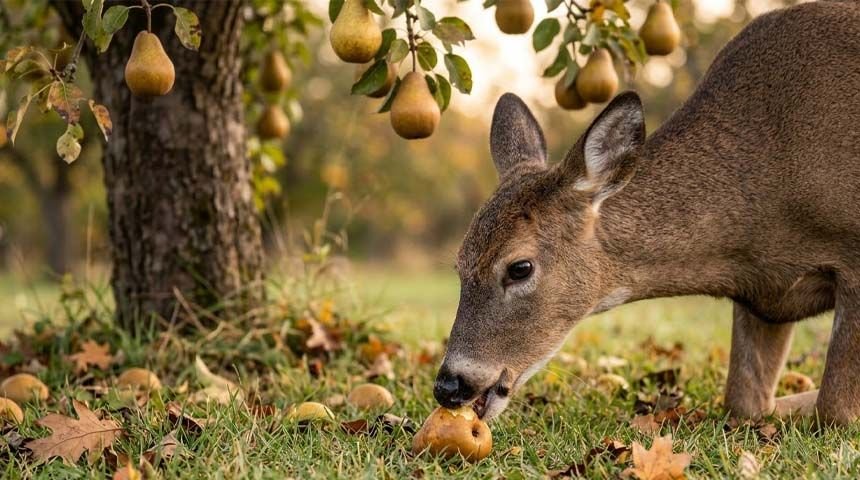
4. Pears — Best Late-Ripening Option
★ Key Features & Benefits
- Later Drop Timing: Often ripens after early apple varieties have already dropped, spreading out fruit availability.
- Strong Sugar Content: Comparable palatability to apples once fruit softens on the ground.
- Good Orchard Companion: Pairing pear trees with apple trees on a property creates a longer combined fruiting season.
- Hardy Growth: Many pear varieties tolerate a wide range of soil and climate conditions once established.
- Often Overlooked: Fewer landowners plant pears specifically for deer, making an existing tree a less-pressured food source.
✔ Pros
- Extends fruit season past apple drop
- High palatability once ripe
- Hardy across varied conditions
- Less commonly targeted than apples
- Pairs well with an apple planting
❌ Cons
- Slower to reach full production than some apple varieties
- Less commonly found wild/naturalized
- Requires similar young-tree protection as apples
Pears — The Quiet Season-Extender
A mature pear tree doesn’t get the reputation apples do, but that’s part of its value — deer traffic isn’t split across every hunter’s radar the way a well-known apple tree’s is. Planted alongside apples as part of a long-term attractant strategy, pears help stretch a productive fruit window several extra weeks.
5. Mulberries — Best Early Summer Source
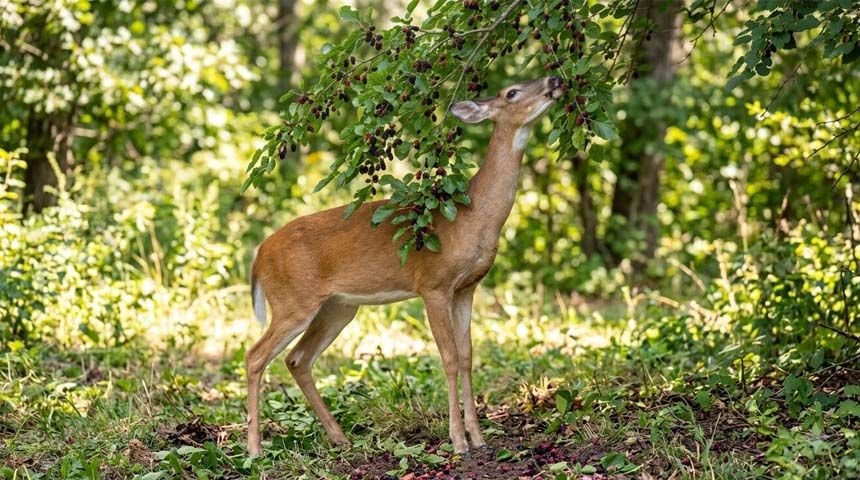
★ Key Features & Benefits
- Earliest Major Fruit Source: Often the first significant fruit drop of the year, well ahead of apples or persimmons.
- Heavy, Fast Drop: Mature trees can drop large amounts of fruit over a relatively short and intense window.
- Great for Summer Patterning: A productive mulberry tree is a strong location to run cameras for off-season buck patterning.
- Fast-Growing Trees: Mulberry trees tend to grow and mature faster than many other fruit tree species.
- Attracts Other Wildlife Too: Turkeys, songbirds, and other species also feed heavily on mulberries, adding overall wildlife value.
✔ Pros
- Earliest fruit source of the year
- Fast-growing, quicker to mature than most fruit trees
- Excellent for summer camera patterning
- Heavy fruit volume when mature
- Benefits multiple wildlife species
❌ Cons
- Short drop window compared to fall fruits
- Ripens well before hunting season in most states
- Staining fruit can be messy near driveways/structures if planted close to home
Mulberries — The Off-Season Intel Tree
Since mulberries ripen well before archery season opens in most states, a productive tree is best used as a summer scouting tool rather than a huntable food source. Run a camera on it, log which bucks are showing up, and fold that data into your scouting notes for the season ahead.
6. Wild Plums — Best Field-Edge Fruit
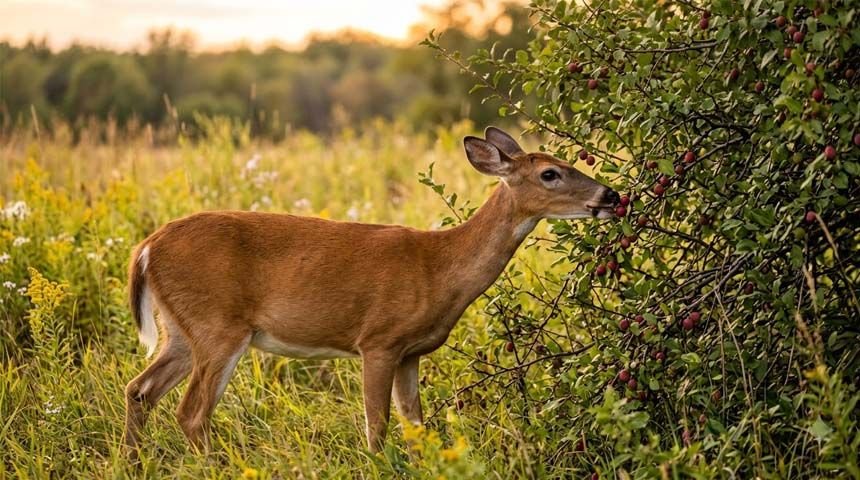
★ Key Features & Benefits
- Thicket Growth Habit: Wild plums often grow in dense colonies, creating natural cover alongside a food source.
- Common Along Field Edges: Frequently found bordering agricultural fields, fence lines, and old pastures.
- Combines Food and Travel Cover: The thicket structure doubles as a natural travel corridor deer feel comfortable using in daylight.
- Low Maintenance: Established wild plum colonies spread and persist with no management required.
- Useful Pinch Point Indicator: A plum thicket along a field edge often marks a natural funnel worth investigating further.
✔ Pros
- Combines food source with cover
- Common in field-edge habitat
- Zero-maintenance wild growth
- Often marks a natural travel corridor
- Self-spreading colony growth
❌ Cons
- Lower individual fruit draw than apples or persimmons
- Thorny growth can make scouting/access difficult
- Fruit size and yield vary significantly by colony
Wild Plums — A Cover-and-Food Combo
A wild plum thicket rarely produces the single-tree draw of an apple or persimmon, but its real value is structural — it’s food and cover in the same footprint. That combination often marks a natural tripod stand location along a field edge worth a closer look.
7. Crabapples — Best Cold-Hardy Option
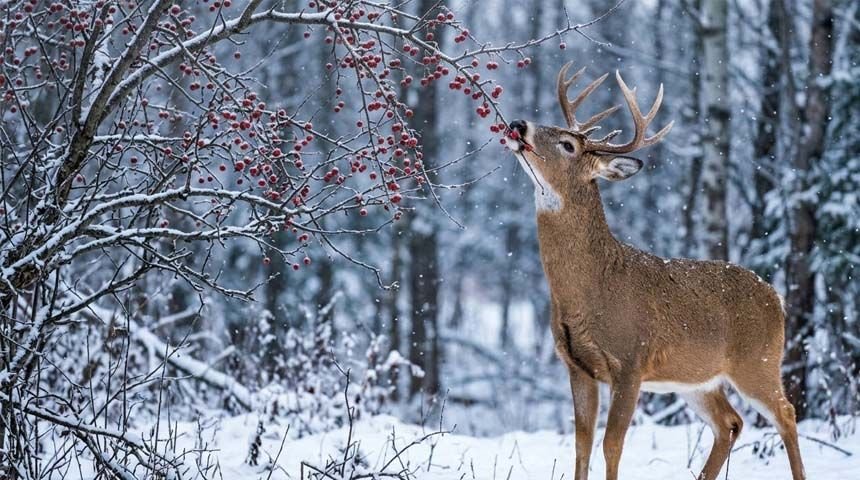
★ Key Features & Benefits
- Persists Into Late Season: Fruit often remains available on branches or frozen on the ground longer than softer fruits.
- Extreme Cold Hardiness: Thrives in colder climates where other fruit trees struggle to establish or produce reliably.
- Fills a Late-Season Gap: Becomes more valuable as other fruit sources are exhausted heading into winter.
- Ornamental Varieties Widely Available: Many landscaping crabapple cultivars also produce fruit deer will readily eat.
- Small, High-Volume Fruit: Trees often produce large quantities of smaller fruit, extending total available food.
✔ Pros
- Excellent late-season availability
- Thrives in colder climates
- High fruit volume per tree
- Widely available cultivars
- Fills a gap when other fruit is gone
❌ Cons
- Tart flavor means lower preference than apples when both are available
- Smaller individual fruit size
- Lower overall draw ranking than sweeter fruits
Crabapples — The Late-Season Fallback
Crabapples won’t outdraw a fresh apple or persimmon drop, but their real strength shows up when everything else is gone. A crabapple tree still holding fruit in a cold snap fits naturally into a late-season, cold-weather hunting strategy when deer are keying in on any remaining calorie source.
8. Blackberries — Best Multi-Use Browse
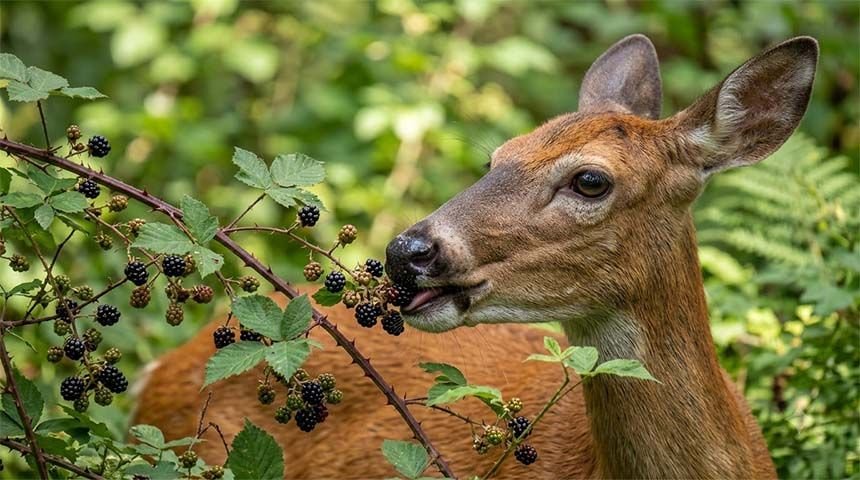
★ Key Features & Benefits
- Multi-Season Value: Leaves and tender cane growth are browsed well beyond the short summer fruiting window.
- Thicket Cover: Dense bramble patches provide bedding and escape cover in addition to food value.
- Common in Disturbed Habitat: Thrives along field edges, clear cuts, and other disturbed or transitional ground.
- Self-Spreading: Established patches expand naturally without any planting or maintenance.
- Supports Broader Habitat: Blackberry thickets benefit turkeys, small game, and other wildlife alongside deer.
✔ Pros
- Year-round browse value beyond just fruit
- Provides bedding/escape cover
- Thrives in disturbed, low-maintenance habitat
- Self-spreading, no planting needed
- Benefits multiple wildlife species
❌ Cons
- Lower individual fruit draw than tree fruits
- Thorny canes can complicate access and scouting
- Short, easily-missed fruiting window
Blackberries — The Habitat Multiplier
Blackberry brambles rarely headline a scouting report, but their combined food-and-cover value makes them worth noting whenever they show up near a bedding area. As part of a broader habitat picture, they complement decoy and calling setups by helping hold deer on a property longer through the summer months.
📅 How Fruit Fits Into a Deer’s Seasonal Diet
Summer: Early Soft Mast
Mulberries and other early-ripening fruits provide a brief but heavily used food source in early-to-mid summer, supplementing the grasses and forbs deer rely on most of the growing season. This is typically the first fruit window of the year, and deer take full advantage while it lasts.
Late Summer to Early Fall: Apples and Wild Grapes
As apples begin dropping and wild grapes ripen, deer shift noticeably toward these sources, often visiting the same productive trees or vine patches daily. This window frequently overlaps with the early season hunting period, making a known apple tree one of the most reliable early-season stand locations on a property.
Fall: Persimmons and Competition With Hard Mast
Persimmons typically ripen in October and November, often overlapping with acorn drop. When both are available, deer preference can shift day to day depending on which is more abundant or more recently dropped — but a heavy persimmon drop can pull deer away from a nearby oak stand entirely for as long as the fruit lasts.
Winter: Fruit Becomes Scarce
By late season, most fruit sources are exhausted, frozen, or fermented past the point of appeal, and deer shift almost entirely to browse, standing crops, and any remaining hard mast. This is one of several reasons late-season hunting strategy looks so different from early-season strategy — the food sources driving movement have completely changed.
⚠ A Note on Sudden Diet Changes
Deer have a complex digestive system that adapts gradually to seasonal diet shifts. A sudden, large influx of high-sugar food — like a pile of dropped fruit or spilled corn appearing overnight — can occasionally cause digestive upset in deer unaccustomed to it, similar to acidosis in livestock. This is rarely a major concern with naturally occurring fruit trees that ripen gradually, but it’s worth keeping in mind if you’re placing large quantities of fruit-based attractant abruptly rather than letting a natural source ripen over time.
🌰 Fruit (Soft Mast) vs. Acorns (Hard Mast)
Which Wins When Both Are Available?
Fruit is classified as “soft mast,” while acorns and other nuts fall under “hard mast.” Both are important fall food sources, but they serve slightly different roles. Soft mast like fruit offers fast sugar energy but spoils quickly and is only available for a short window. Hard mast like acorns provides more fat and protein, stores better on the ground, and often lasts longer into the season. When both are dropping heavily at the same time, deer preference can vary by individual and by region, but many hunters and biologists note that deer will often hit a fresh, heavy fruit drop hard for the first several days before settling back into a more balanced pattern that includes acorns.
- Soft mast (fruit): fast sugar energy, short shelf life, intense but brief draw
- Hard mast (acorns): higher fat/protein, longer-lasting, more sustained food source
- A property with both often sees deer alternate between the two throughout fall
🌳 Using Fruit to Attract Deer to Your Property
Planting Fruit Trees for the Long Term
Apple, pear, persimmon, and plum trees are all popular choices for landowners looking to build a long-term deer draw. Fruit trees take several years to mature and begin producing meaningfully, so this is a patience-driven strategy rather than a quick fix — but a mature, productive tree can become one of the most reliable stand locations on a property for a decade or more. Choose varieties suited to your climate and plant in sunny locations with good soil drainage for the best fruit production.
Locating and Hunting Existing Wild Fruit Sources
Old homesteads, abandoned orchards, and fence lines often hold mature wild apple or pear trees that have gone unnoticed for years. These can be some of the highest-value, lowest-effort food sources on a property, since they’re already established and producing without any planting or maintenance required. Locating these during the off-season is a natural extension of a broader scouting effort — walk fence lines and field edges specifically looking for fruit-bearing trees you may have overlooked.
Fruit-Based Attractants and Scents
Commercial fruit-scented and fruit-based deer attractants use concentrated apple, persimmon, and other fruit flavors to replicate the draw of a natural fruit source in areas without a mature tree nearby. These work especially well as a trail camera lure or a supplement near an existing food source, giving deer an added reason to linger in front of a camera or within range of a stand.
Check Local Regulations Before Baiting
Placing fruit, whether store-bought or from your own trees, to intentionally draw deer for hunting purposes counts as baiting in most states, and baiting regulations vary significantly by state and even by county. Some states prohibit baiting entirely, others allow it with restrictions on quantity or distance from a stand, and some permit it freely. Always confirm current local regulations before placing any fruit specifically to attract deer for a hunt, and keep this in mind alongside the rest of your deer hunting gear checklist as you plan the season.
📋 Quick Reference: Top Deer Fruits by Season
| Fruit | Type | Ripens | Deer Draw |
|---|---|---|---|
| Mulberries | Wild | Early-Mid Summer | High |
| Apples | Cultivated/Wild | Late Summer-Fall | Very High |
| Wild Grapes | Wild | Late Summer-Fall | High |
| Pears | Cultivated | Fall | High |
| Persimmons | Wild/Cultivated | Fall | Very High |
| Wild Plums | Wild | Late Summer | Moderate |
| Crabapples | Wild | Fall | Moderate |
| Blackberries | Wild | Summer | Moderate |
🎒 Spotting Fruit Sign While Scouting
What to Look For
- Fallen or half-eaten fruit scattered beneath a tree
- Well-worn trails leading directly to and from a fruit tree
- Fresh droppings concentrated near a fruiting tree or vine patch
- Old homesteads, fence lines, and field edges — common spots for overlooked fruit trees
- Trail camera activity that spikes suddenly in early fall near a specific tree
- Browse marks on lower branches and stripped bark on younger fruit trees
❓ Frequently Asked Questions
1. What fruit do deer like the most?
Apples and persimmons are generally considered the top favorites among both hunters and wildlife biologists, with deer often traveling out of their way to reach a productive tree of either once fruit starts dropping.
2. Can I feed deer fruit year-round?
Fruit is only naturally available for a limited window each year, and deer’s digestive systems adjust gradually to seasonal diet changes. Providing large amounts of fruit outside the natural season, or introducing it suddenly in large quantities, isn’t how deer would encounter it naturally and isn’t recommended.
3. Is it legal to put out fruit to attract deer for hunting?
It depends entirely on your state and sometimes your specific county. Many states classify placed fruit as bait and regulate or restrict it the same way they regulate corn or other feed. Always check current local regulations before placing fruit specifically to draw deer for a hunt.
4. Do deer eat the leaves and twigs of fruit trees too, or just the fruit?
Deer readily browse the leaves, twigs, and even bark of many fruit trees, especially young saplings. This is actually a common challenge for anyone planting new fruit trees for deer, since young trees may need protective fencing or tubing until they’re established enough to withstand browsing pressure.
5. How long does a fruit tree take to start producing enough to attract deer?
Most fruit trees take several years to reach meaningful production, with apple and pear trees often needing three to five years or more depending on variety and growing conditions. This makes fruit tree planting a long-term investment rather than an immediate attractant strategy.
6. Will deer eat fermented or rotting fruit?
Yes, deer will readily eat overripe and even fermenting fruit, and some hunters have reported deer showing altered behavior after consuming significant amounts of fermented drops, similar to mild intoxication in other species. This isn’t typically dangerous in small amounts but is worth being aware of if you’re observing unusual deer behavior near a heavily fermented fruit pile.
🍇 Final Thoughts: Fruit Is a Genuine Whitetail Priority
Deer don’t just tolerate fruit — for several weeks each year, it becomes one of the highest-value food sources on the landscape, capable of concentrating movement around a single productive tree. Understanding when specific fruits ripen in your area, and locating the wild and cultivated trees already on your property, gives you a genuine edge without spending a dollar on attractant. Combine that knowledge with the rest of your seasonal strategy — knowing when deer move most, understanding broader whitetail behavior, and applying it through consistent scouting — and a single overlooked apple tree can become the best stand location you have.
Once you’ve confirmed a productive fruit source, build the rest of your setup around it: a tripod stand positioned downwind, a dialed-in rifle scope ready for the shot, and one of the best deer blind heaters if you’re settling in for a long early-morning sit. Pair it with a decoy or one of the best deer calls during the rut, and you’ve got a complete strategy built around something as simple as a tree full of ripe apples.
Baiting and feeding regulations regarding fruit and other attractants vary significantly by state and county — always confirm current local laws before placing fruit to intentionally draw deer. Explore our deer hunting gear checklist and deer hoist guide to round out your season planning. Curious about unusual deer sightings? Check out our piece on how rare black deer really are, or browse our recommended deer hunting book for more in-depth whitetail knowledge.

Leave a Reply