
A great trail camera for hunting is one of the most powerful scouting tools a hunter can own. It watches your property 24 hours a day, tracks deer movement patterns, identifies bucks before season opens, and sends photos directly to your phone — all without you setting foot in the woods. Whether you want a budget-friendly non-cellular camera or a fully connected 4G LTE model with AI detection and live streaming, the right trail camera gives you a serious edge over every other hunter in the area.

In this guide, we have picked the 6 best hunting trail cameras of 2026 — from the budget-friendly GardePro E5S with no monthly fees, to the premium TACTACAM Reveal Pro 3.0 with 4K photos and built-in GPS. Every camera on this list has been researched and selected for real-world hunting performance. If you want to pair your trail camera with complete field gear, also check out our guide on the Best Survival Kits for Hunters.
| # | Camera | Label | Type | Link |
|---|---|---|---|---|
| 1 | SPYPOINT Flex-M Twin Pack | Our Pick | Cellular | Amazon ↗ |
| 2 | TKENPRO 4G LTE 360° Camera | Best 360° View | Cellular | Amazon ↗ |
| 3 | Moultrie Edge 3 (2 Pack) | Best AI Detection | Cellular | Amazon ↗ |
| 4 | GardePro E5S | Best Non-Cellular | SD Card | Amazon ↗ |
| 5 | TACTACAM Reveal Pro 3.0 | Premium Pick | Cellular | Amazon ↗ |
| 6 | SEHMUA AI Detection Camera | Best Unlimited Data | Cellular | Amazon ↗ |
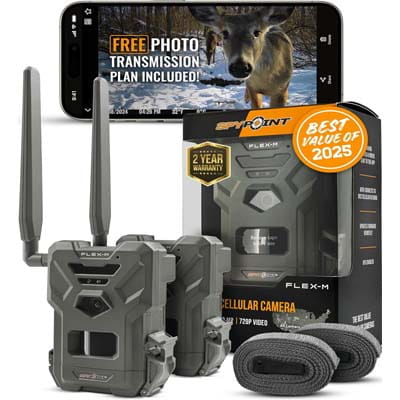
SPYPOINT Flex-M Twin Pack Cellular Trail Camera — 28MP, GPS, Dual-SIM LTE, Night Vision, IP65
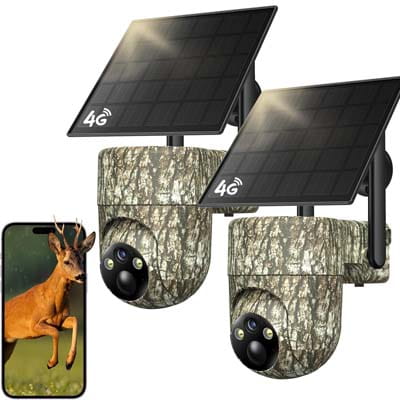
TKENPRO 4G LTE Cellular Trail Camera — 360° Live Streaming, 2K Night Vision, Built-in SIM, Solar, 2 Pack
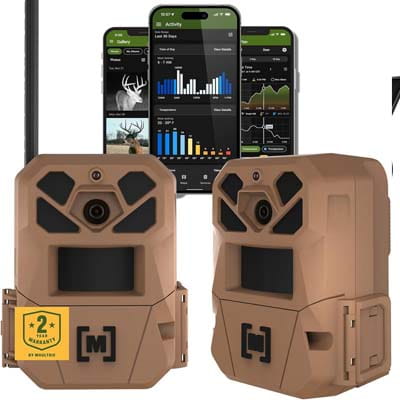
Moultrie Edge 3 Cellular Trail Camera 2 Pack — 40MP, 1080p, AI Buck Detection, GPS, 0.5s Trigger
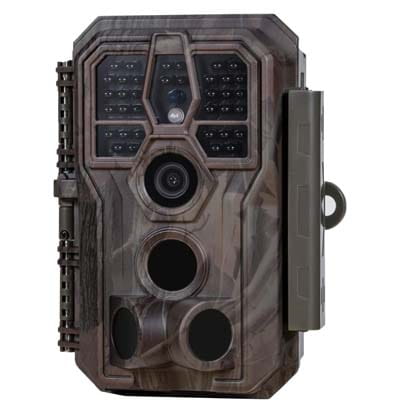
GardePro E5S Trail Camera — 64MP, 1296P HD, 0.1s Trigger, 100ft No-Glow Night Vision, No Subscription
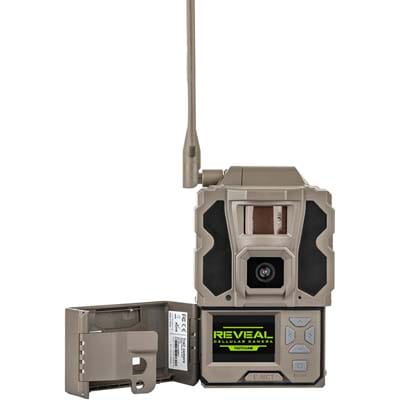
TACTACAM Reveal Pro 3.0 Cellular Trail Camera — 4K Photos, No-Glow IR, GPS, On-Demand Video, 4G LTE
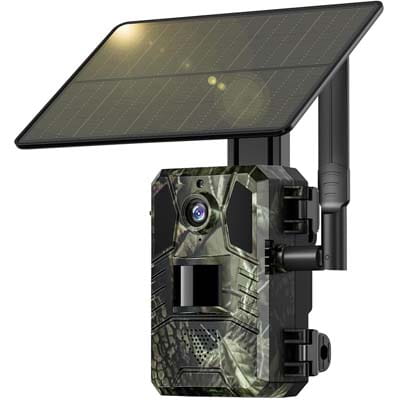
SEHMUA AI Animal Detection Cellular Trail Camera — 4G LTE, Live Streaming, Unlimited Data Plan, IP66
A hunting trail camera is your eyes in the field 24 hours a day, 7 days a week — even when you are at home. It tracks deer movement, identifies shooter bucks before season opens, monitors scrapes and rubs, and helps you understand travel patterns on your property. Hunters who use trail cameras consistently fill tags faster because they know exactly where deer are moving, when they are moving, and which routes to set up on.
Modern trail cameras for hunting have advanced dramatically in 2026. Cellular cameras send photos straight to your phone without a single trip to the woods. AI models like the Moultrie Edge 3 and SEHMUA automatically detect bucks and predict future activity. And non-cellular options like the GardePro E5S deliver razor-sharp 64MP images with zero monthly fees. No matter your budget or hunting style, a trail camera is the one tool that keeps working for you around the clock.
Cellular vs. Non-Cellular — Which Is Right for You?
Cellular trail cameras send photos directly to your phone over 4G LTE networks — no SD card retrieval needed. This means zero disturbance to your hunting area and instant alerts when a buck appears. Non-cellular cameras like the GardePro E5S store photos on an SD card — no monthly fees, longer battery life, and simpler operation. If your hunting property has cell coverage, go cellular. If not, a non-cellular camera is the smarter, more reliable choice.
Resolution — How Many Megapixels Do You Need?
More megapixels mean sharper photos with more detail — critical when you need to count antler points or identify a specific buck at distance. The GardePro E5S leads this list at 64MP. The Moultrie Edge 3 shoots 40MP and the SPYPOINT at 28MP. For most hunters, 28-40MP is more than enough to identify game and assess antler size. The key is image quality from the sensor, not just the megapixel count on the box.
Trigger Speed — Do Not Miss the Shot
Trigger speed is how fast the camera fires after detecting motion. The GardePro E5S leads at 0.1 seconds — the fastest on this list. The SEHMUA and TKENPRO hit 0.2 seconds. The TACTACAM Reveal Pro 3.0 fires at 0.38 seconds. Slower triggers above 0.5 seconds can result in deer already exiting the frame before the camera fires. For fast-moving game, always choose a camera with a trigger speed of 0.3 seconds or faster.
Night Vision — No-Glow vs. Low-Glow IR Flash
No-glow infrared flash (940nm) is completely invisible to animals and humans — ideal for areas with hunting pressure or where you do not want to tip off other hunters. Low-glow flash (850nm) emits a faint red light that most animals ignore but can occasionally spook sensitive deer. The TACTACAM Reveal Pro 3.0 and GardePro E5S use true no-glow flash. For pressured hunting areas, always choose a no-glow camera.
GPS — Never Lose Your Camera
Built-in GPS automatically pins your camera’s location on a map in the app — essential when running multiple cameras across large properties. The SPYPOINT Flex-M, Moultrie Edge 3, and TACTACAM Reveal Pro 3.0 all include GPS. GPS also helps with theft recovery and makes it far easier to find cameras after heavy snowfall or when landmarks change between seasons.
AI Detection — The Future of Scouting
AI-powered trail cameras like the Moultrie Edge 3 and SEHMUA automatically identify species — filtering out squirrels, birds, and vegetation — so you only get notified when a deer or buck appears. The SEHMUA goes even further by analyzing weather and pressure data to predict animal activity peaks for the next 7 days. This technology is rapidly becoming standard on premium hunting cameras and dramatically reduces the number of useless false-trigger photos you receive.
Battery Life & Power Options
Battery life varies significantly between cameras. The TACTACAM Reveal Pro 3.0 can last up to 7.6 months on lithium AA batteries — the best battery life on this list. The TKENPRO and SEHMUA run on solar power for virtually unlimited operation. Non-cellular cameras like the GardePro E5S also last much longer since they do not have power-hungry cellular radios. Always pair your cellular camera with a solar panel accessory for year-round, hands-free operation.
Subscription Costs — Know What You Are Paying
Cellular cameras require a data plan to transmit photos. SPYPOINT offers a free 100-photo plan per month — the only truly free cellular option on this list. Moultrie plans start at $9.99 per month. TKENPRO and SEHMUA plans start at $19.90 per month after a 7-day trial. The GardePro E5S has zero subscription costs — ever. Always factor in the ongoing subscription cost when comparing camera prices, as it adds up significantly over a full hunting season.
| Camera | Resolution | Trigger | Cellular | GPS | Monthly Fee |
|---|---|---|---|---|---|
| SPYPOINT Flex-M | 28MP / 720p | 0.4s | Yes (Dual SIM) | Yes | Free / $5+ |
| TKENPRO 360° | 2K Live | 0.2s | Yes (4G LTE) | No | $19.90+/mo |
| Moultrie Edge 3 | 40MP / 1080p | 0.5s | Yes (4-Carrier) | Yes | $9.99+/mo |
| GardePro E5S | 64MP / 1296p | 0.1s | No | No | Zero |
| TACTACAM Pro 3.0 | 4K / 1080p | 0.38s | Yes (Multi) | Yes | Subscription |
| SEHMUA AI | 2K Live | 0.2s | Yes (4G LTE) | No | $19.90+/mo |
Place Your Camera Perpendicular to the Trail — Not Facing Down It
Most hunters point their trail camera directly down the trail — this is a mistake. When a deer walks straight toward the camera, it passes through the detection zone in less than a second, often resulting in blurry or missed shots. Instead, position the camera at a 45-degree angle to the trail so the deer walks across the detection zone rather than toward it. This dramatically increases the chance of capturing a clean, sharp image of any animal that passes by.
Set Up Your Camera at Least 4–6 Weeks Before Season Opens
Deer are creatures of habit — but they are also extremely sensitive to new objects in their environment. A trail camera placed too close to opening day will be avoided by mature bucks for weeks until they grow accustomed to it. Set your cameras out in late summer, at least 4 to 6 weeks before season, so deer have time to normalize the camera’s presence. This gives you an accurate picture of deer patterns — not a picture of deer avoiding your camera.
Use Scent-Free Gloves Every Time You Handle or Check Your Camera
Human scent left on a trail camera will alert mature deer immediately — often driving them to avoid that area entirely for days or weeks. Always wear rubber or latex gloves when installing, checking, or moving your cameras. Use scent-free sprays on the camera body before placing it in the field. For cellular cameras like the SPYPOINT and TACTACAM, the biggest advantage is that you never need to physically visit the camera to retrieve photos — keeping your hunting area completely scent-free all season long.
1. What is the best trail camera for deer hunting in 2026?
The SPYPOINT Flex-M Twin Pack is our top overall pick for deer hunting in 2026 — it offers reliable cellular connectivity, GPS, and a free 100-photo monthly plan at an unbeatable price for two cameras. For serious hunters who want the best image quality and longest battery life, the TACTACAM Reveal Pro 3.0 is the premium choice with 4K photos and up to 7.6 months of battery life.
2. Do I need a cellular trail camera or is non-cellular good enough?
It depends on your hunting style. Cellular cameras are worth every penny if you want instant phone alerts when a buck appears and zero trips to the woods. But if your property lacks 4G coverage, or if you want to avoid monthly subscription fees, the GardePro E5S is the best non-cellular option — it shoots 64MP photos with 0.1-second trigger speed and costs zero per month to operate.
3. What trigger speed do I need for hunting trail cameras?
For deer hunting, a trigger speed of 0.3 seconds or faster is ideal. The GardePro E5S has the fastest trigger on this list at 0.1 seconds. Anything above 0.5 seconds risks catching only the rear end of a passing deer. Fast trigger speed matters most on trails where animals are moving at a trot or crossing quickly — like field edges and pinch points between bedding and feeding areas.
4. Are trail cameras with AI detection worth it?
Yes — especially for cellular cameras. Without AI, you can receive hundreds of false-trigger photos from wind, branches, and small animals every week. AI detection like Moultrie’s Buck Detection filters out false triggers and instantly alerts you only when a buck appears — saving hours of photo sorting and keeping you focused on the right targets. The SEHMUA goes even further by predicting 7-day activity windows based on weather and pressure data.
5. How many trail cameras do I need for my hunting property?
A good rule of thumb is one camera per 100 acres, placed at key locations — primary scrapes, mock scrapes, field edges, funnels, and pinch points between bedding and feeding areas. For a 200-acre property, 3 to 4 cameras positioned strategically will give you a complete picture of deer movement. The SPYPOINT and Moultrie twin packs are great starting points that give you two cameras to cover two key locations right out of the box.
🏁 Final Verdict
Choosing the right trail camera for hunting depends on your budget, property size, and how hands-on you want to be. For the best overall value, the SPYPOINT Flex-M Twin Pack is hard to beat — two cellular cameras with GPS and a free monthly plan. For the sharpest photos with zero fees, the GardePro E5S is unmatched. And for hunters who want the absolute best, the TACTACAM Reveal Pro 3.0 delivers 4K photos, no-glow IR, and 7.6 months of battery life.
Whatever camera you choose, set it up early, handle it with scent-free gloves, and position it at an angle to the trail for the best results. A well-placed trail camera will tell you more about deer movement in one week than years of blind guessing. For even more hunting preparedness gear, check out our guide on the Best Survival Kits for Hunters. Scout smart and hunt smarter!
⚠️ Affiliate Disclosure: HuntsHunter is a participant in the Amazon Associates Program. We may earn a small commission if you purchase through our links, at no extra cost to you. This helps us keep creating free, helpful content for hunters. All product recommendations are based on research and genuine value to our readers.

Leave a Reply