
30-06 vs 308 Winchester: Complete Ballistic Comparison
The .30-06 Springfield and the .308 Winchester represent two of the most popular rifle cartridges in hunting history — and for good reason. Both are capable, reliable, and battle-tested across nearly a century of hunting and military service. Yet hunters often face a critical choice between them, and the answer depends on your specific application, rifle platform, and hunting style.
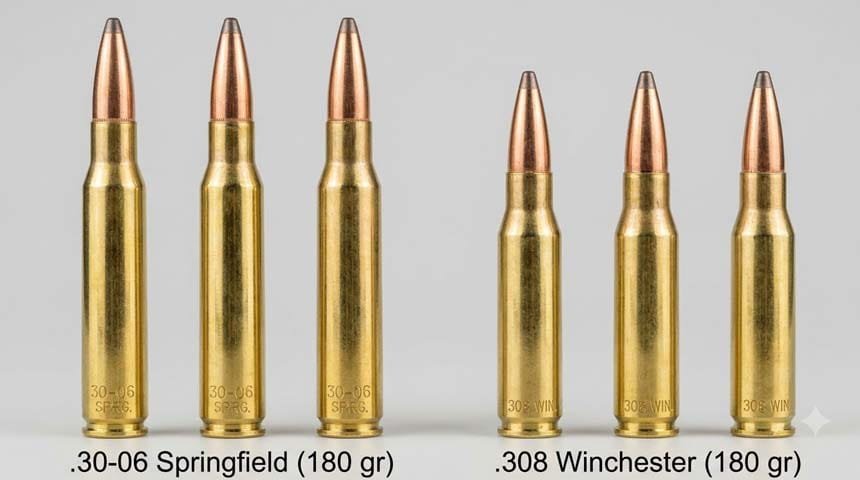
The .30-06 predates the .308 by decades, born from World War I military needs with proven long-range capability. The .308 Winchester, developed in the 1950s, was designed as a shorter, more compact alternative with nearly identical ballistics in a more efficient package. Understanding the real differences — not the myths — matters when choosing the right cartridge for deer, elk, or long-range target shooting.

In this guide, we break down ballistics, practical differences, real-world performance, cost, and accuracy to help you choose the right cartridge for your hunting rifle. Whether you’re building your first hunting rifle or upgrading existing gear, the decision between these two American classics deserves a clear-eyed comparison.
⚠ Caliber Choice Impacts Rifle Selection & Ammunition Cost
Your choice of .30-06 or .308 will determine which rifle platforms are available to you, lock you into specific ammunition pricing, and affect recoil management and long-range performance. This is not a casual decision — pick the right one and you’ll have a rifle that handles perfectly for decades. Choose poorly and you’ll be stuck with poor ergonomics, excessive recoil, or ammunition scarcity during hunting season.
Quick Overview: At a Glance
1. 30-06 Springfield (30-06 Sprg)
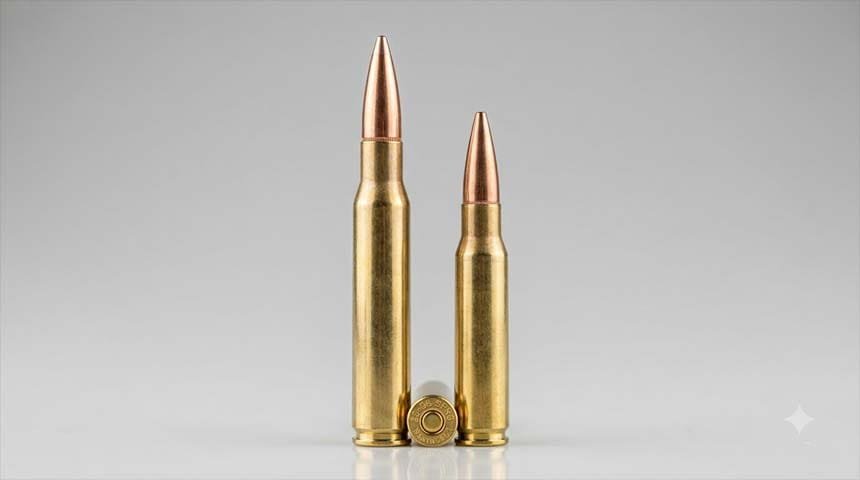
2. 308 Winchester (7.62×51 NATO)
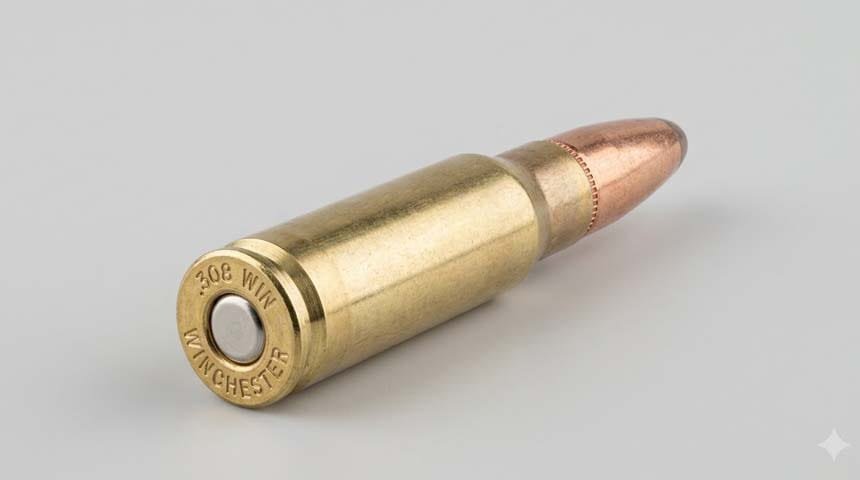
📊 Ballistics & Specification Comparison
| Specification | .30-06 Springfield | .308 Winchester |
|---|---|---|
| Year Introduced | 1906 (U.S. Military) | 1952 (Winchester) |
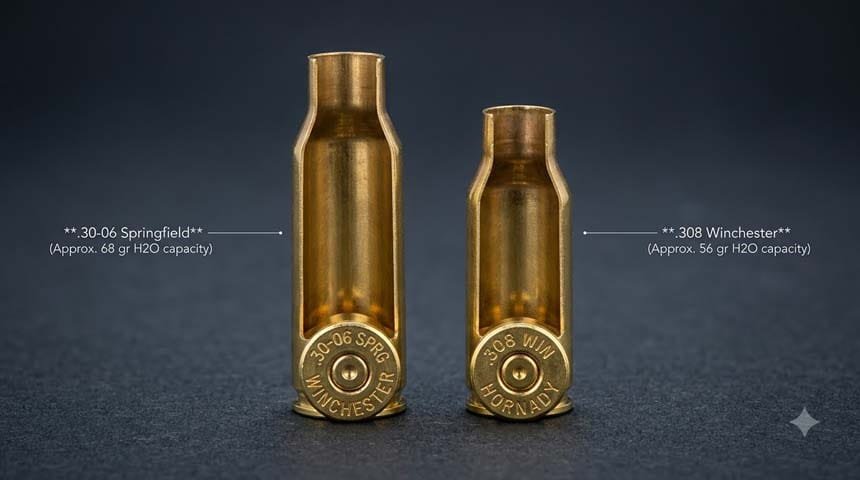
| Case Length | 2.494 inches | 2.015 inches |
| Bullet Diameter | .308 inches (7.62mm) | .308 inches (7.62mm) |
| Typical Velocity (180gr) | 2,880 fps | 2,620 fps |
| Muzzle Energy (180gr) | 3,315 ft-lbs | 2,745 ft-lbs |
| Recoil Energy | 20-23 ft-lbs | 17-20 ft-lbs |
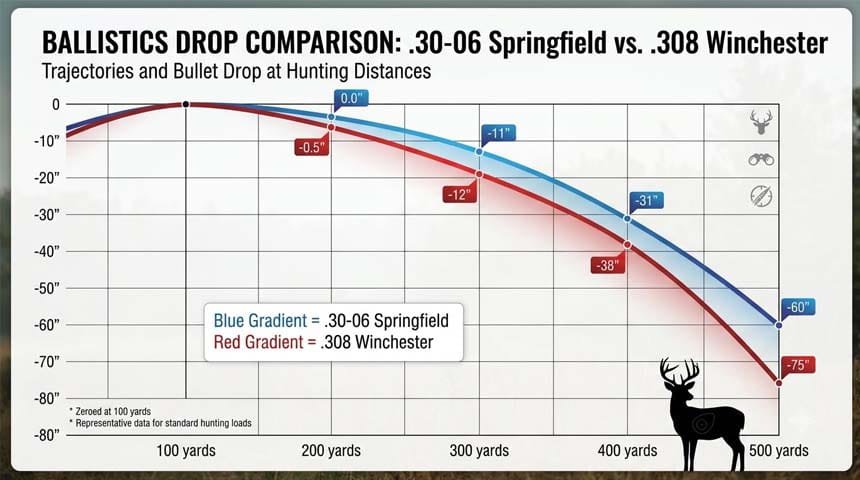
| Drop at 300 yards (180gr) | ~4.5 inches | ~5.5 inches |
| Drop at 500 yards (180gr) | ~28 inches | ~38 inches |
| Typical Ammunition Cost | $0.85-$1.20 per round | $0.75-$1.00 per round |
| Availability | Moderate (declining) | Excellent (widely available) |
| Rifle Platform Options | Spring-action, semi-auto | AR-10, bolt-action, semi-auto |
🔍 Head-to-Head Analysis
Velocity & Long-Range Performance
The .30-06 sends bullets downrange 200-300 fps faster than the .308, meaning flatter trajectory and less hold-over adjustment at distance. A .30-06 with a 180-grain bullet drops about 1 inch less at 300 yards and roughly 10 inches less at 500 yards than an equivalent .308 load.
Real-world impact: For hunters regularly shooting past 400 yards, the .30-06’s superior velocity translates to simpler holdover calculations and tighter shot groups. For 300-yard hunting, the difference is academic — both will perform identically. The .308’s slower speed is a tradeoff for less recoil and the modular AR-10 platform.
Recoil & Followup Shots
The .308 produces 15-20% less recoil than the .30-06, a meaningful difference you’ll feel on the bench and in the field. Faster follow-up shots, less shooter fatigue over a long hunting day, and better accuracy for recoil-sensitive shooters all favor the .308.
Real-world impact: If you’re sensitive to recoil, hunting all-day, or shooting from awkward positions (tree stands, prone in brush), the .308’s softer kick is a tangible advantage. For younger hunters or smaller-framed shooters, the difference between a .308 and .30-06 can mean the difference between comfortable shooting and flinching.
Ammunition Cost & Availability
The .308 is cheaper and more readily available than .30-06 ammunition, especially quality hunting loads. A box of premium .308 ammunition might run $0.75-$1.00 per round, while .30-06 often runs $0.85-$1.20, and availability swings dramatically in favor of .308 during ammunition shortages.
Real-world impact: Over a hunting lifetime, the .308 will save hundreds of dollars in ammunition costs. More importantly, the .308’s dominance in AR-platform rifles means better availability of ammunition during peak hunting season or after supply chain disruptions. .30-06 availability is declining as fewer AR rifles use it.
Rifle Platform Availability
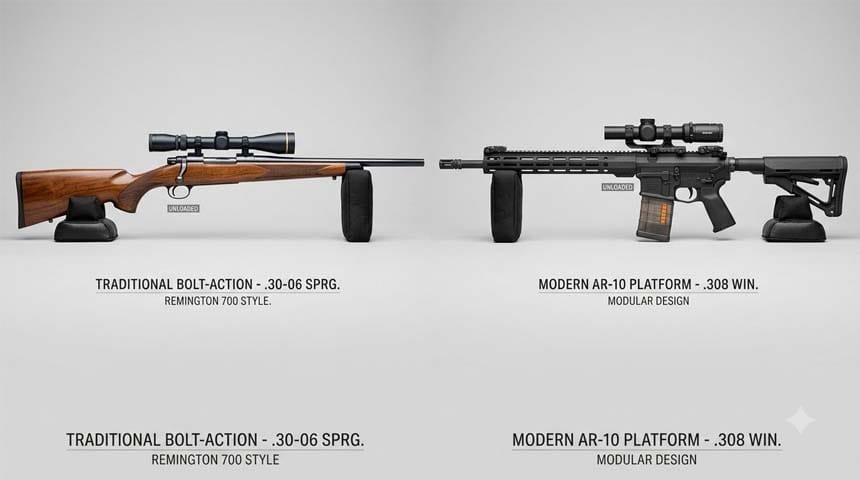
The .308 dominates modern rifle platforms, especially the AR-10 modular rifle platform. You’ll find AR-10s, precision bolt-actions, lever-actions, and semi-automatic hunting rifles all readily available in .308. The .30-06 is limited primarily to traditional bolt-action spring rifles and a few semi-auto options.
Real-world impact: If you want an AR-10 for long-range hunting, you’ll be using .308. If you want a traditional spring-rifle with a classic look and feel, the .30-06 remains the standard. Your rifle preference may actually decide your caliber choice, not the other way around.
Hunting Effectiveness on Game
Both cartridges are equally capable for deer, black bear, and elk within ethical ranges (300-400 yards for elk, 300+ yards for deer). The real difference is shot placement, bullet selection, and shooter ability — not the cartridge itself. A properly placed .308 shot will always beat a poorly placed .30-06 shot.
Real-world impact: Choose based on platform, recoil sensitivity, and ammunition cost — not on power. Both will cleanly take any North American game animal. The hunter’s skill matters infinitely more than the 5% ballistic difference between these two cartridges.
✅ .30-06 vs .308: Pros & Cons Breakdown
.30-06 Springfield
✔ Pros
- Higher velocity = flatter trajectory
- Better at extreme range (500+ yards)
- Legendary track record (since 1906)
- Widely used in traditional bolt-action rifles
- Extra power for larger game
- Wide range of ammunition loads available
❌ Cons
- Higher recoil (not beginner-friendly)
- Ammunition availability declining
- Slightly higher ammunition cost
- Limited AR platform options
- Overkill for deer hunting
- Harder on shooter shoulder long-term
.308 Winchester
✔ Pros
- Significantly less recoil
- Excellent ammunition availability
- Cheaper ammunition (long-term savings)
- Dominates AR-10 platform
- Military/NATO cartridge = abundant ammo
- Perfect for 300-400 yard hunting
❌ Cons
- Lower velocity = more holdover at distance
- Drops faster beyond 400 yards
- Less common in traditional spring rifles
- May feel underpowered to magnum devotees
- Slightly lower muzzle energy
🛒 How to Choose: Which Caliber for You?
You Want a Modern AR-10 Rifle
→ Choose .308 — The AR-10 platform was built around .308, and that’s where 95% of AR-10 variants live. AR-10 rifles offer modularity, customization, and speed of follow-up shots. Pair it with a quality hunting rifle scope — or consider a night vision scope if you hunt predators after dark — and you have a genuinely modern hunting platform.
You Want a Classic Bolt-Action Spring Rifle
→ Choose .30-06 — The classic Remington 700, Winchester 70, or Savage bolt-action rifle feels right in .30-06, and ammunition options abound. The .30-06 remains the standard for traditional hunting rifles, and that heritage matters if aesthetics and feel matter to you.
You’re Sensitive to Recoil or New to Rifles
→ Choose .308 — The softer kick is real and noticeable, especially from a lightweight rifle in the field. The .308 will keep you shooting confidently all day without developing a flinch, and recoil sensitivity is not a weakness — it’s a factor worth addressing.
You Hunt Exclusively at 300 Yards or Less
→ Choose .308 — Inside 300 yards, the ballistic difference is negligible. The .308’s cost advantage and ammunition availability matter far more than velocity you won’t use. Save money on ammunition and buy better optics instead.
You Hunt Open Country at 400+ Yards
→ Choose .30-06 — The superior velocity and flatter trajectory pay real dividends when taking long shots. The extra holdover adjustment for .308 at distance adds another variable when you’re already judging wind and distance. The .30-06’s velocity advantage matters in these scenarios.
You Hunt Elk or Large Game
→ Either works, but .30-06 feels stronger — Both kill elk cleanly at proper range, but the .30-06’s extra velocity and muzzle energy feels more comfortable when hunting larger game. The psychological factor matters; if the .30-06 feels more powerful, you’ll shoot it more confidently.
Budget Matters & You Shoot a Lot
→ Choose .308 — The .308’s lower ammunition cost compounds over years of shooting. If you handload, both are economical. If you buy factory ammunition, the .308’s $0.20-0.30 per-round advantage adds up to hundreds of dollars annually for active hunters.
📈 Ballistics Comparison: 180-Grain Bullets
Note: Data assumes zero at 100 yards with typical hunting loads. Actual ballistics vary by powder charge, bullet weight, and barrel length.
❓ Frequently Asked Questions
1. Is .30-06 really more powerful than .308?
On paper, yes — the .30-06 carries about 570 more foot-pounds of energy at the muzzle and maintains a velocity advantage through the entire range spectrum. In practice, both cartridges kill game equally well within normal hunting ranges (300 yards or less). The .30-06’s power advantage matters only at extended ranges where velocity drop becomes significant.
2. Can I use .30-06 and .308 ammunition interchangeably?
Absolutely not. These are entirely different cartridges with different case lengths and pressures. Loading .308 ammo into a .30-06 rifle or vice versa creates a dangerous pressure spike that can damage or destroy a rifle. Always verify you’re using the correct ammunition for your specific rifle.
3. Which is better for a first hunting rifle?
The .308 Winchester is the better choice for a beginner. Less recoil means you’ll develop better shooting fundamentals without flinching. The .308’s easier ergonomics and lower cost make it the smarter entry-level option. You can always upgrade to a .30-06 later if you want the extra velocity and legacy appeal.
4. Is the .308 being phased out?
No — quite the opposite. The .308 is NATO standardized (7.62×51 NATO) and is used by military forces worldwide. It remains incredibly common and ammunition will never be scarce. The .30-06, while not disappearing, is declining in commercial ammunition options as the .308 dominates the modern rifle market.
5. Can I reload .30-06 and .308 cheaply?
Yes — both cartridges are excellent candidates for handloading, and reloading will save you 40-50% per round versus factory ammunition. If you plan to shoot thousands of rounds, reloading makes financial sense. Both calibers have excellent reloading component availability and established load data.
6. Which is better for hunting elk?
Both are elk-legal in all U.S. states, and both are equally effective when proper shot placement occurs. The .30-06 carries slightly more energy, which some hunters feel more confident with on large game, but a well-placed .308 shot is equally lethal. Choose the cartridge you shoot best — that matters more than the 5% power difference.
7. Why is the .308 so popular in AR-10 rifles?
The .308 case is naturally suited to the AR-10 platform due to its shorter case length — it feeds reliably, cycles smoothly, and allows for a compact but powerful rifle. The .30-06’s longer case creates feeding and cycling issues in the AR platform, which is why AR-10s are almost exclusively .308 (or 6.5 Creedmoor).
🎯 Final Verdict: Which Should You Choose?
.30-06 Springfield is the choice if you want a classic spring-action rifle, love the historical significance of the most famous American hunting cartridge, regularly hunt beyond 400 yards, or prefer the extra velocity and slightly higher power. It remains the gold standard for traditional hunting rifles and a cartridge with unmatched heritage.
.308 Winchester is the choice if you want a modern AR-10 platform, value lower recoil and easier follow-up shots, hunt primarily at 300-400 yards, care about ammunition cost and availability, or are new to rifles. The .308 is the practical, efficient choice for the modern hunter.
The hard truth: If you’re paralyzed by the decision, you can’t go wrong with either. Both are proven killers with a century of combined field success. The difference between them matters far less than your shooting skill, your scope quality, and your practice routine. Choose the platform that excites you — AR-10 or spring rifle — and the caliber choice essentially makes itself. Then buy a quality hunting rifle, mount proven optics, and spend time at the range. Whether you’re hunting day or night with night vision equipment, mastering your chosen caliber matters infinitely more than splitting hairs between two excellent cartridges.
⚠️ Disclaimer: This article is for educational purposes and represents commonly accepted ballistic data and hunting practices. Always consult your rifle manufacturer’s specifications before shooting any ammunition, and verify all ballistic data with authoritative sources like published reloading manuals. Hunting regulations vary by state — always confirm that your chosen caliber is legal for your specific game and region before hunting. For more on hunting rifles and optics, explore our guides on hunting rifles, rifle scopes for deer, and prism scopes.

Leave a Reply